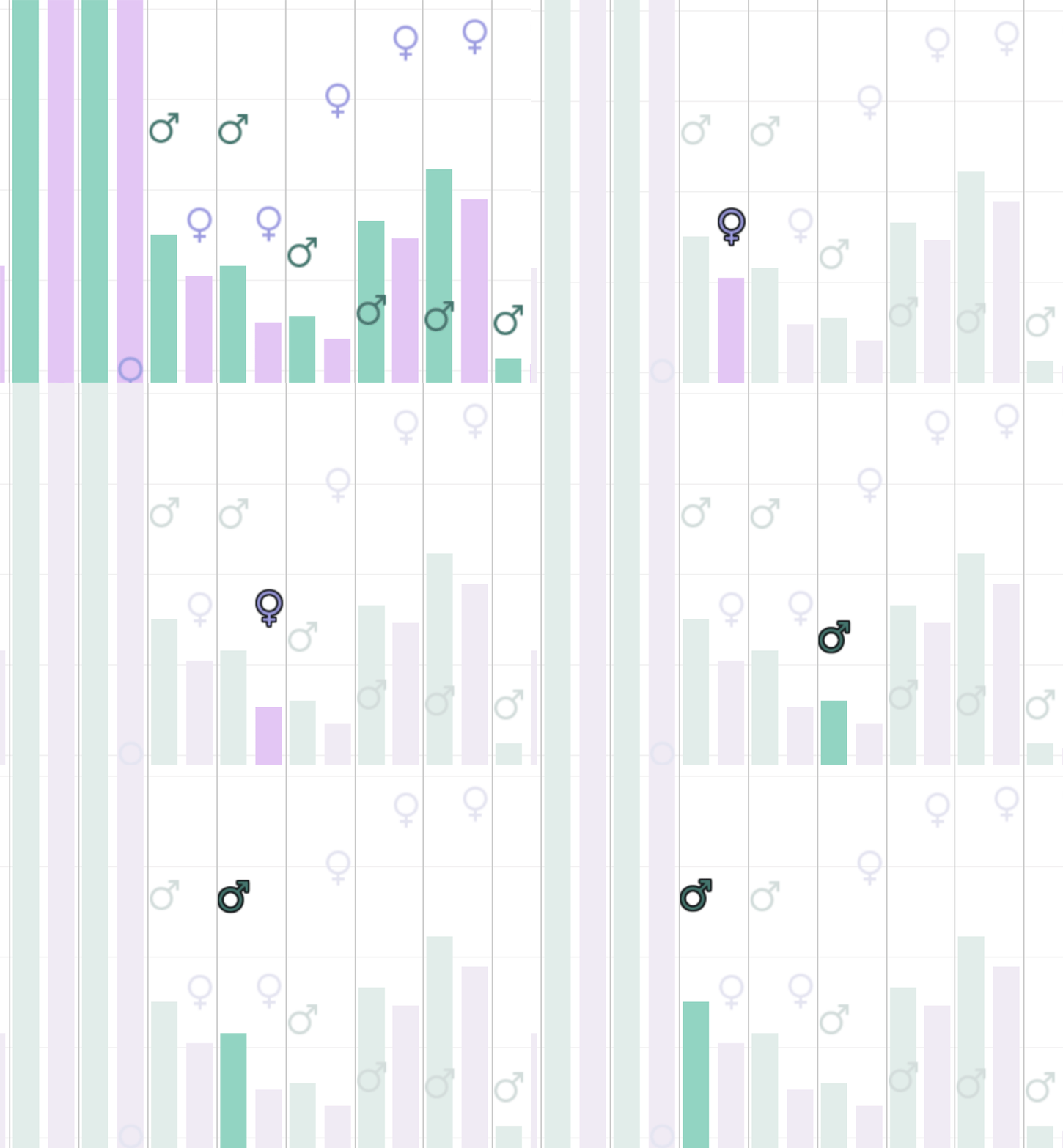

While the gender pay gap has declined since 1979, the state has not made any significant or lasting progress in closing the gap since the late 1990’s. In Washington, a typical woman (or one earning median wage) is paid 22 cents less per dollar paid to a typical man. Assuming 40 hours per week, 52 weeks per year, for 40 years, that adds up to $18,304 in lost wages.
The gender pay gap is not an education gap – nor is it solely a product of having fewer women in some industries than others. At every level of education, women are paid less than similarly educated men – and the wage gap rises with additional education. The gap also exists in all industries – including those in which more women are employed than men.

Footnotes
[1] American Community Survey 2017 1-Year Estimates, Sex by Industry and Median Earnings in the Past 12 Months for the Full-Time, Year-Round Civilian Employed Population 16 Years and Over, Washington State.
[2] Based on EOI analysis of U.S. Census Quarterly Workforce Indicators, Full Quarter Employment (Stable) wages and employment; monthly wage calculated as 3-quarter weighted average for 2017 Q1 to 2017 Q3.