Part 1(opens in new tab) | Part 2 | Part 3(opens in new tab)
Many public sector jobs – such as teachers and social workers – require college or graduate degrees, while some of the largest private sector occupations – such as cashiers and waiters – require little formal education.
- In the U.S., 27.4% of public sector employees have college degrees and 23.5% have advanced degrees, compared to 20.9% and 8.9% respectively in the private sector.
-
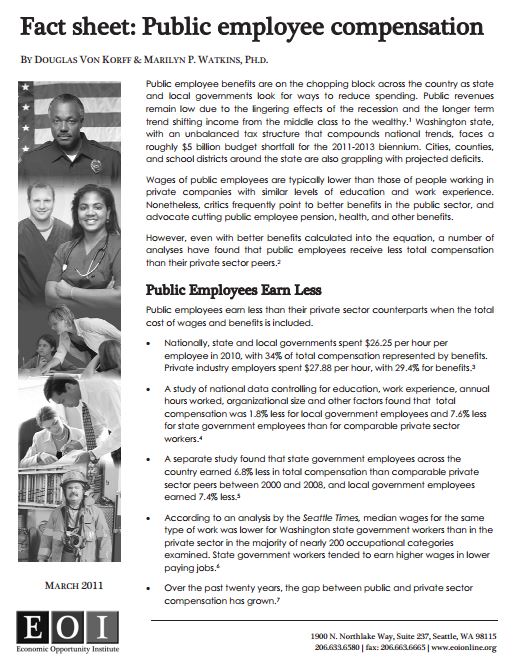
Policy brief: Public employee compensation
In Washington, 48.3% of state and local government employees have a bachelor’s degree or higher, compared to 31.4% of private sector workers in the state. - The average age of public sector workers in Washington is 47 compared to 39 in private industry.
- Overall, people whose formal education ended with a high school diploma or associate’s degree tend to earn slightly more in the public sector, but those with a bachelor’s degree or higher earn significantly less in the public sector.
The average total compensation gap for public service, including both wages and benefits, is 6.8% to 7.6% for state workers and 1.8% to 7.4% for local government employees.
Read more | Fact sheet: Public employee compensation »(opens in new tab)