
August 5th, 2013 marks the 20-year anniversary of the Family Medical Leave Act – the nation’s first law guaranteeing most workers job-protected unpaid leave for certain medical or family emergencies. This week our blog will focus on the importance of family and medical leave programs and the need to pass the next generation of family and medical leave protections.
The United States has many accomplishments to be proud of – our inability to provide job-protected leave for new moms is not one of them.
Twenty years ago, the Family Medical Leave Act (FMLA) was signed by President Clinton – giving new moms their first right to job-protected, but unpaid, leave for the birth or adoption of a child.
But FMLA has a number of restrictions on who can qualify for leave such as the number of people at a company or how many hours worked in a year. The result? Only 19 percent of moms-to-be are eligible for the FMLA.
In the world’s richest country, we’re leaving the health and well-being of new moms and their children up to chance. That’s unacceptable.
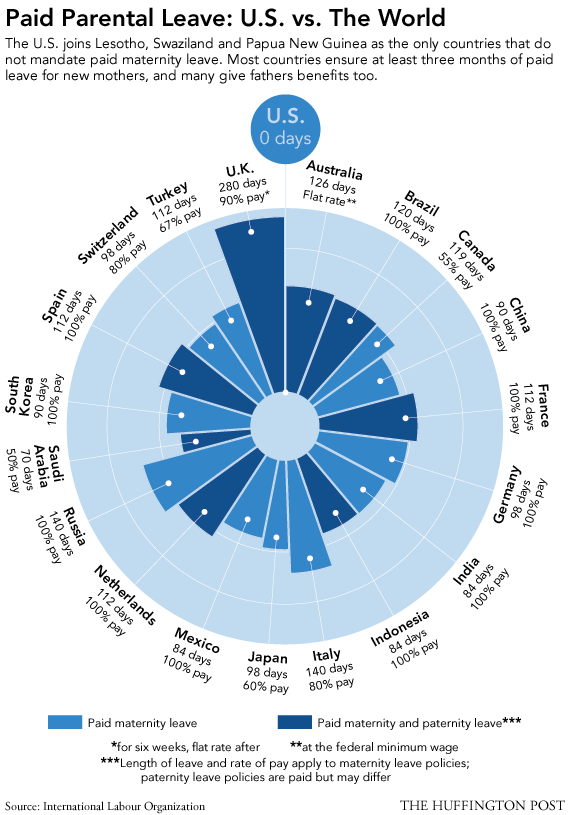
A number of studies have demonstrated that paid leave improves childhood early development, early childhood health due to extended breast feeding and early family bonding. The argument that more paid leave is bad for business is, quite frankly, unfounded. With the exception of the U.S., the world’s leading economies all manage to provide paid maternity leave while cultivating strong economic growth.
We need family and medical leave programs that recognize the needs of today’s working families – that means being able to care for a new baby and pay the bills.
Family and Medical Leave Insurance does just that. FMLI allows workers to take time off for certain family or medical emergencies while receiving partial wage replacement. California, New Jersey and Rhode Island have successfully rolled out FMLI while New York and Hawaii have statewide disability insurance that covers all workers.
In 2014, EOI and the Washington Work and Family Coalition will be working to pass a statewide FMLI program for Washington state. It’s time for Washington – and the U.S. – to catch up with the 21st century and implement the next generation of leave programs.
By EOI intern Elissa Goss
- Leave a Reply
More To Read
August 10, 2026
Buy, Borrow, Die: How tax codes gut community well-being to line pockets of the wealthy
We are long overdue for a tax code that requires the ultra-wealthy to pay what they owe.
July 30, 2026
What the Millionaires Tax would mean for Washington
We’re not paying the benefits of economic growth forward like we used to. The Millionaires Tax can change that.
July 9, 2026
How will the Millionaires Tax impact us?
The Millionaires Tax adds critical revenue to our state budget and starts to rebalance our upside-down tax code.